
Jatropha curcas – background information
Jatropha curcas – background information
Scientific name: Jatropha curcas
Common names: Physic nut, purging nut
Family: Euphorbiaceae
Origin: Mexico/ Central America
– Occurs wildly in almost all tropical and sub-tropical countries of the world
Perennial shrub
– Grows up to about 5-6m height
– Grows well in warm tropical climates
– Plant is drought tolerant, adaptable and thrives on nutrient poor soils
– Flowering and fruiting seasonal usually connected to the rainy seasons
– Fruits containing 2-4 seeds, usually 3.
– Dry fruit weighs about 2.5g, 60% weight seeds and 40% weight fruit husk
– The seeds contain about 37.5% by weight shell, 30-40% oil and the rest mostly protein
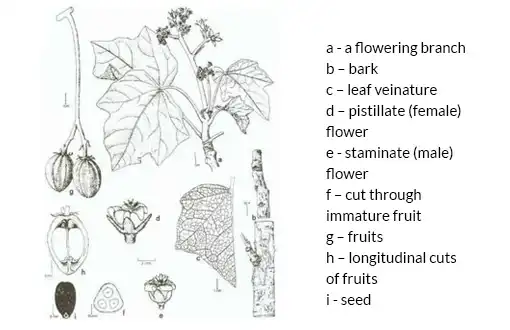
Two varieties of Jatropha curcas occur naturally:
– conventional non-edible jatropha plants and
– a phenotypically similar, but edible variety called Xuta, which lacks compounds called phorbol esters present in the non-edible varieties.
Traditional uses: fence plant around small farms, medicinal purpose, edible variety (called Xuta in Mexico) used as human food in Mexico
Pollination is by insects, usually honey bees
The Jatropha plant, even the edible variety, is non-edible to grazing animals, but honey produced from it is edible
Conventional, non-edible Jatropha plants are familiar backyard and fence plants in many countries and people are familiar with it and its non-edible nature.
Jatropha plantation products
Pruned biomass:
to keep the plants at a height of about 2m, pruning would be required every year. Depending on plant nature and size between 1.5 and 5kg dry matter would be generated from 1 plant through pruning
Jatropha fruit fractions:
the major production item from the jatropha plantation are the fruits. They yield the following fractions on processing.
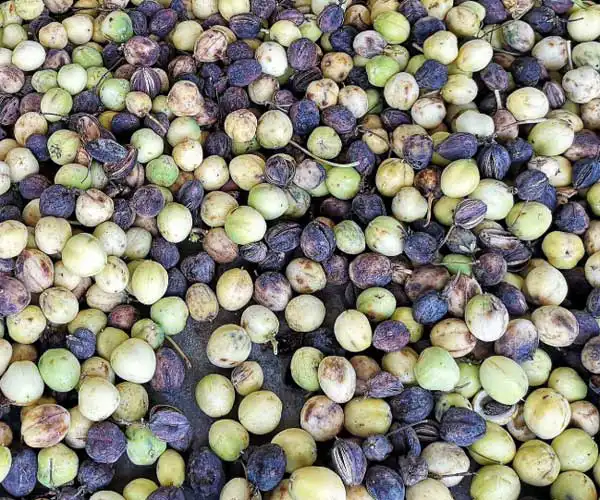
Freshly harvested fruits
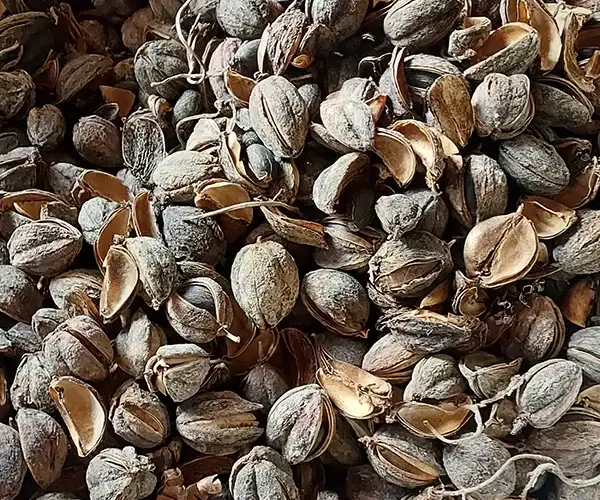
Dried fruits – 3 days of sun drying
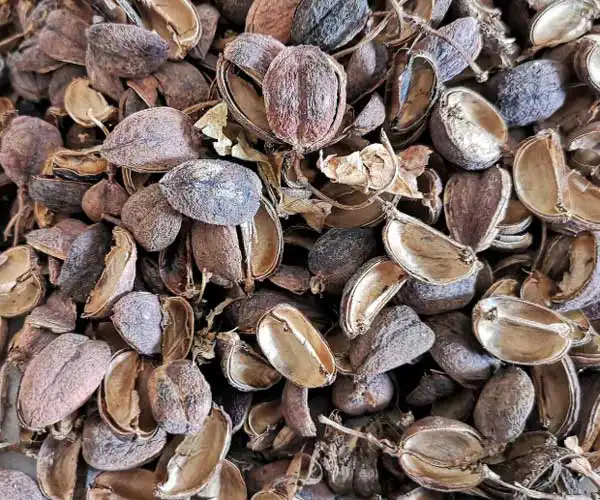
Fruit Husks
The fruits can be mechanically shelled using simple locally made machinery. Both fresh and dried fruits can be de-husked. The wet husk is ideal for mulching the plantation. For dry fruits mulch forms about 40% w/w. Dry husk has an energy content of 14MJ per kg and can be used as burning fuel.
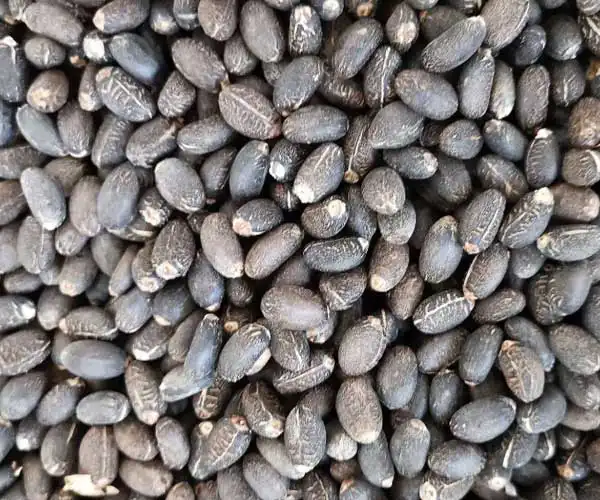
The seeds form 60% /w of the dried fruits. They can be mechanically shelled into Shell and kernel.
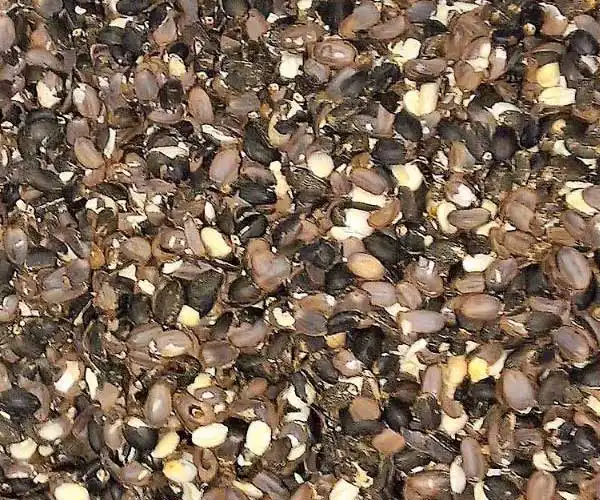
Jatropha shell (mechanically shelled) forms about 37.5% of the dry seed. It has a high energy content of 18MJ/kg and is a good burning fuel.
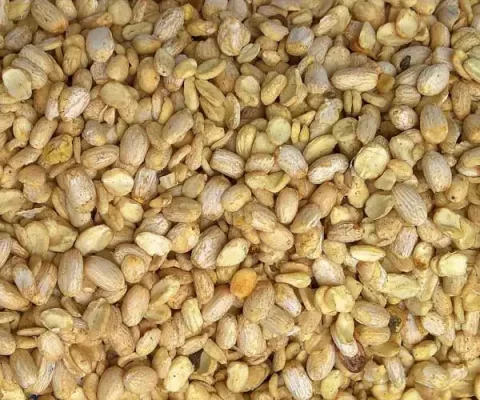
Kernel forms about 62.5% of the dry seeds and can be crushed to separate oil and kernel meal.

Jatropha oil forms about 60% w/w of the kernel and is an ideally fuel oil and feed stock for bio-diesel and bio-aviation-fuel. Edible jatropha oil has potential to become an ideal edible oil.
Average fatty acid composition (%) of Jatropha curcas seed oil
| Oleic acid (C-18:1) | 35-51% |
| Linoleic acid (C-18:2) | 27-42% |
| Palmitic acid (C-16:0) | 9-22% |
| Stearic acid (C-18:0) | 5-8% |
| Arachidic acid (C-20:0) | 0-2% |
| Myristic acid (C-14:0) | 0-2% |
| Palmitoleic acid (C-16:1) | 0-1% |
Typical physical/chemical properties of Jatropha curcas seed oil
| Calorific value | 37.8 MJ/kg |
| Appearance | Light yellow liquid |
| Specific gravity at 30°/30° | 0.92 |
| Kinematic velocity, cSt at 40°C | 36 |
| Acid value | 1 |
| Saponification value | 197 |
| Iodine value | 102 |